Showing posts with label preserving food. Show all posts

Monday, October 13, 2014

Practicing what I preach.... my fridge died.

I've lived most of my adult life without refrigeration.  But a few years ago we added a few more solar panels to our small array and decided we had enough to run a small energy-efficient refrigerator.  We bought a 10-cubic foot refrigerator from Home Depot, and we put it on a shaded porch where it would be out of the sun during the day, and during our cold Montana nights (even in summer), it wouldn't run much after dark when it would only have the power from our battery bank after the sun went down. 

Just took this picture, with the flash since it's dark outside.  This is the fridge that just
died.  That's a magnet on the freezer door, from the sporting goods store.


We had some problems at first since it didn't like our inverter. My husband could talk at length about different inverters and sine waves and modified sine waves and so forth, and about the electronics on newer appliances and how delicate they are.  The bottom line for me was that we needed a different inverter.  A neighbor had just replaced theirs with a bigger one and the older one was the right kind of "waves" that my husband thought would work better for the refrigerator.

He rewired our solar power system and put the refrigerator and a few other things on that inverter, and left the rest of the house on our old inverter.  All went well for a few years.

I thought in the back of the mind that milk wasn't staying as cold lately as it should be.  Friday I went to put something in the littler freezer and I thought "huh, some of this stuff doesn't feel that solid", so I turned the freezer up a little bit. 

The next day, Saturday, we went to town in the morning and among other errands we picked up groceries.  When we got home and I went to put the food away, the first thing I did was open the freezer to put in the bags of frozen mixed vegetables I'd just bought.  It was barely cool in there and everything was partially thawed.  I opened the fridge compartment and felt the milk carton.  It wasn't very cold either.

My husband put a thermometer in the fridge and in the freezer.  He tried a few other things, such as unplugging it for a while, then plugging it back in.  He pulled out the manual and went through the trouble-shooting section.

I pulled out canning jars and got busy.  I started with all the meat, vegetables, and broth that I had stored in the freezer.

Here's the jars on the counter, and a pan (right) with the bags of meat and bags of vegetables.
I had just chopped up an onion and distributed it among the jars.
 
I added vegetables, meat, fettucine noodles, and salt, pepper, and garlic powder, and a bit of powdered dried spinach.  Then I rain it through the pressure canner.
 
Then I lined a cake pan lid with parchment paper and spread sour cream on it to dry.
 
I lined some dehydrator sheets with parchment paper and spread cottage cheese on them.
 
In the upper left corner you can see shelf brackets where I have two of the drying pans sitting.  The top one is the cake pan lid with the sour cream on it.  The bottom one is cottage cheese.  This is behind our woodstove. That cement board on top of cement blocks leaning against the log wall is to keep our log wall from getting too hot.  The black thing running up the right side of the picture is our stove pipe.  Food dries quickly there behind the woodstove.
 
The other sheets of cottage cheese are in the oven drying.  We have a propane range with a pilot light in the oven, and it keeps it warm and dry in the oven.
 
One of our sons gave us a small fridge his father-in-law had picked up at a yard sale for $20.  It's just a little square cube, but it holds a couple gallons of milk, the cheese and butter, and a few packages of meat that I stuffed in it's little (and already frosty) freezer. 
 
It's also out on the porch and not running much with our 35 degree nights and 50-ish days.  Not all small fridges are low-watt but fortunately this one is only 135 watts.  We plan to have it emptied and shut off in a couple weeks.  We don't have enough solar over the winter, and by then "nature's refrigerator" has kicked in up here in cold country.
 
I had just stocked up on butter and cheddar cheese because they finally ran a good sale.  I had planned to freeze the extra pounds of butter, and use up the 2-lb. block of cheese before it got too old.  But now I've rounded up several half-pint jars and I'm going to can up the butter and cheese in those jars tomorrow.  Fortunately the ketchup, mayo, parmesan cheese, and eggs are keeping just fine in the little cooler.  I open it at night and set everything out on the table on the porch so the cold nights chill it good.  First thing in the morning I set it back in the cooler and close it, and set it on the floor with a blanket around it for insulation. 
 
We'll wait until spring to decide if we want to try a refrigerator again.  Propane refrigerators are expensive and way out of reach for us.  So it would have to be a small, energy-efficient fridge again.  But we might have the same problem again with the electronics being fried by the variances in voltage and sine waves and other issues that come with a solar power system.
 
But that doesn't bother me.  After all, life without refrigeration has been the norm for me for years, and besides...I wrote the book on "Life Without Refrigeration"! 


Hmmm... some humor... I guess like a bake sale to raise money, I could put my book link here and raise money for a new refrigerator!  Might have enough by spring!  :D
 
Please leave questions or comments below or email them to me at:
 
Susan


 Here's the dehydrated cottage cheese after it dried.  It crumbled into pieces, which I crumbled further and put in a pint jar.  The 16-oz. carton of cottage cheese that I dried ended with a little over half of a pint jar of dried cottage cheese.  It only took over night to dry, but I ended up leaving it on the racks until late afternoon because I was busy. 
 
To re-hydrate it I put some of the dried cottage cheese in a bowl and add a little water and keep stirring and mashing at it with a spoon until it's creamy and mixed.  It's not as tasty at 'room temperature' so you can mix up a small bowl and set it in the fridge to chill if you want.
 
The sour cream came out well too.  It's like dried white frosting in texture and appearance.  It rehydrates well, just like the cottage cheese.  A bit in a bowl and keep adding a few drops of water at a time until it's the consistency you want.


Tuesday, October 29, 2013

A visit with Dave...in person!

Earlier this month we went to Texas to meet with Dave and look things over and plan out our next book in the food preserving series and a few other projects we thought up.
 
A lot of the conversation was about our various food preserving experiments.  Dave's house is like a museum of food preserving and it's results.
 
Cooked, dehydrated, and vacuum-sealed sausage patties.  He sent some of these home with us and we munched on them in the car.  Delicious, and no one got sick.  I don't remember how old he said these were, but he'd eaten some that were older and never gotten sick.

Christmas pudding, which is essentially fruitcake. 
It's from last Christmas...almost a year ago.  It was tender and moist when we opened it and sampled it.  I just recently found out, while doing the "Beets" chapter in our upcoming book that some of the 'fruit' in here was actually beets!  They had been canned with sugar, then dehydrated a year later.

Homemade bread that Dave made. 
I think it had acorn meal in it, but it might have been the other
homemade bread we had while there.

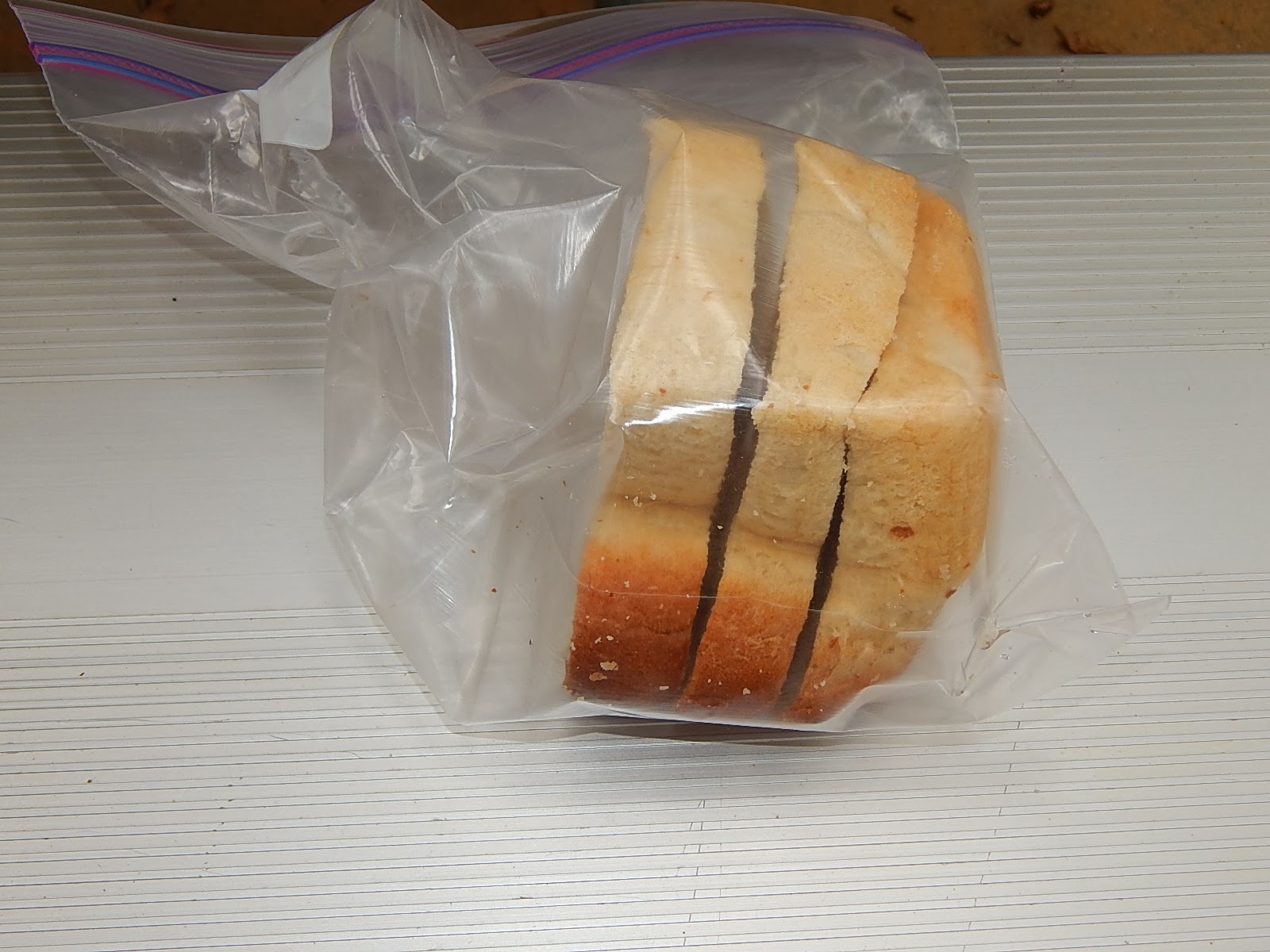
Dehydrated slices of cheese.  This was an experiment I asked Dave to do last winter while we were working on the our book Preserving Meat, Dairy, and Eggs

Pound cake. 
It's interesting to me that it doesn't scorch on the outside against the jar. 
What a great way to have instant desserts!

Pickled cactus.
Texas is a cactus paradise.  If the world falls apart, they can eat off those cactus
that grow like weeds all through the woods and roadsides!  What a wonderful bounty of foraged food.

Watermelon syrup.
We wrote about this in our book, Preserving Fruits, Nuts, and Seeds
I never heard of watermelon preserves, watermelon syrup, or candied watermelon
until I met Dave.  He wastes nothing on a food he's working with.

Cream of Chicken soup
Can you imagine even thinking of dehydrating cream soups!  Brilliant! 
I'm a big fan of dehydrated foods because they take up less room and I don't have to worry about them freezing.  I should be opening cans and dehydrating things, one after the other, to eliminate the risk of losing food to freezing.  We heat our cabin here in NW Montana with firewood and the back rooms get pretty cold when it's below zero.  Dehydrating food is a great answer to the problem
of canned goods freezing.

This lid says "parsley" on it, and below that it says canned greens.
It's dried carrot tops that Dave sprinkles in soups and stuff like dried parsley.
Another one of those "Who would have thought?" moments!

Chili with beans
This really is chili.  Complete chili, cooked, put in a food processor, and dried. 
He cooked some for us, only he also added some cooked, dried beans to give it
some 'texture', even though there are beans in the chili in the jar.  It's not chili powder. 
It's powdered chili, the soup!

Leftover Spaghetti
Leftovers often get canned in Dave's house.  He has a refrigerator, but it's more likely to be used for food waiting to be preserved or ingredients for experiments.

Ginger juice
Dave makes this as a stomach ache remedy.  I can't remember how he said
he made it, so I'll check with him, then edit this post.

Canned velveeta
Dave's version of canned cheese.  Looks just like mine, only I use cheddar cheese. 
We have a post on this blog that gives directions for canning cheese

Bacon Fat
When Dave gets enough of it, he cans it to preserve it.  Then it's handy when
 he needs it, without taking up space in the refrigerator.  He stores it where it's
dark and cool so it doesn't get a rancid flavor.

Watermelon preserves
Another one of the ways he uses watermelon.  His candied watermelon rinds are
excellent too but I don't have a picture of them.

Fresh acorns on the left, acorn meal on the right.
This is one of the processes we described in Preserving Fruits, Nuts, and Seeds .
I know I'm putting our book links in here a lot today.  We put a lot of free information on this blog, but we also spend months working on the books we publish.  You can continue to read whatever is on this blog for free, but some things are just in the books.  It's only fair to hope for some sales to compensate for all the hours of preserving, experimenting, taking pictures, and writing.  But no one is under any obligation to go buy the books.

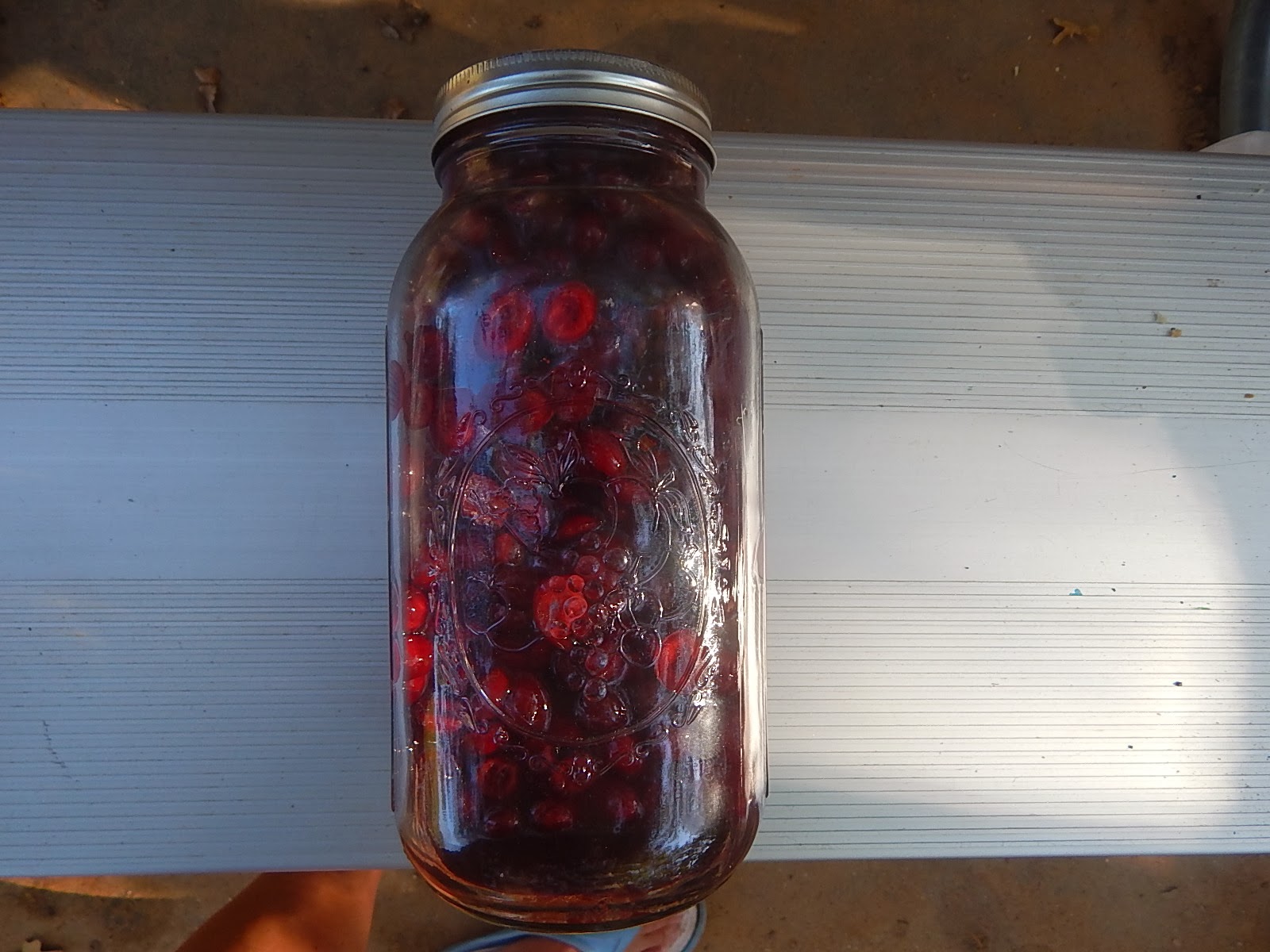
Pickled Cranberries
This is the best of all!  I love Dave's pickled cranberries, better than the recipe I had!
He gave us this half-gallon jar and another one that was still half full.
I lived on those and the dehydrated sausage on the 3-day drive home!  Mmmm-mmm!
(They're in the Fruit/Nut/Seed book)

Chicken Nuggets
Say....WHAT????

My jaw dropped.  Dave canned chicken nuggets! 
He used the dry-canning technique for meat...and made canned chicken nuggets! 
 I am SO going to  try this!  What a great food to have on hand, especially if you don't have refrigerator.  Here on our off-grid homestead I can see these being
a huge treat when the grandkids visit!
 
 
I feel especially blessed to have a friend like Dave.  His hard-working and peaceful nature make him a pleasure to be around, and his knowledge of gardening, food, and food preservation is a wealth in itself.  We loved spending time with him and his family, who are every bit as wonderful as he is. 
We consider them family, and I hope you do too.  Thanks, Dave.
 
Please leave comments and questions below or at povertyprepping@yahoo.com
 
Susan
 
What?  You're asking if I took a picture of DAVE while I was there?
 
It depends.  Do you mean before, or after, midnight?
rotfl (rolling on the floor laughing!)
 

Tuesday, October 1, 2013

Life Without Refrigeration

I've published another book!


Life Without Refrigeration
                                                              http://amzn.to/1bJISU9


A lot of books cover the subject of what to do with the food in your refrigerator if it goes out, whether for a short time or for the long term, but this is the only book devoted solely to the subject, rather than having it as a part of a prepper or survival book.
 
Why would you ever be without refrigeration? There are a lot of reasons why this could happen. It could be voluntary, such as moving to an off-grid property, or involuntary, such as the electric power grid going down due to a natural disaster or terrorist/war act.

Perhaps your refrigerator will quit working at a time when you can’t afford to replace it, or maybe you want to lower your electric bills or reduce your impact on the planet.

Whether it's voluntary or involuntary, it usually involves some life changes or a lot of frantic work to preserve the food from a refrigerator or freezer. It's a good idea to have some back-up plans and information, just in case. 

      This book fills a niche by covering a subject where information is often lacking. Some readers will remember doing these things in the old days, or hearing their parents or grandparents talking about them and enjoy the trip down memory lane. The author's own broad experiences of living without refrigeration in several climates and locales help make this book an interesting read.

Thursday, October 18, 2012

Dave's Kitchen

 
Far, far away, in the land of Texas, I have a good friend named Dave.  Dave lives in his garden, using his house as a place to cook, can, and dehydrate food, and, on rare occasions, sleep.  In his climate he can grow things most of the year.  While I envy that, it's not what I most admire about Dave.
 
What I admire most about Dave is the canning and dehydrating he does.  I've never even heard of some of the things this guy has stuffed in a jar and run through his canner.  Things like pickled watermelon rinds and candied sweet potatoes.  Or dehydrating sweet pickles, eggs, yogurt (yes, yogurt!), sweet breads (pumpkin, banana, etc.), chili, and leftover spaghetti.  He also salts and smokes food to preserve it.
 
As a regular feature of this blog we're going to start checking in with Dave and see what he's up to.  We visited him a couple of weeks ago, and he's the real deal.  And if he's not enough of the real deal, you ought to meet his daughters!!!  What an amazing family.  I hope you enjoy and learn from the things I'll be posting from and about them.
 
 This is just one of the herb beds Dave planted.  This is Basil.  He grows and dries bushels of it every year! 

This is some of Dave's dried basil, vacuum-sealed in Food Saver bags.


The bag in back is dried Okra, and in front is dried sweet pickles.
Dried sweet pickles?
 
In a message earlier this year Dave wrote:
 
"Most of what I dehydrate is just regular raw fruit, vegetables, eggs, cooked beans and rice, and left overs,and cooked pasta.

Yesterday I made a chicken and broccoli dish to serve over rice and there was alot left over(intentionally) so I mixed it with the rice and put it into the dehydrator and just took it out, bone dry, only a fraction of the space and it rehydrated great.

My dehydrator was some of the best money I have ever spent(would be lost without it), next to my tiller that is.

While I was waiting for the chicken and rice to finish up, I canned 30 pounds of chicken leg quarters. I used to can it bone-in but I saw that most people cooked it first. I tried it that way, and now I bake it first, then de-bone it and can it."


Candied sweet potatoes (left) and  Mustang Grape Juice
 
Many of Dave's emails are sent at 1-something or 3-something o'clock in the morning while he's waiting for a canner load of something to finish up.  Or he's about to put something in the dehydrator.  I often wonder what he runs on, because he keeps on running.  Usually he's been out in the garden all day, then prepping, processing, and preserving food most of the night.
 
So, pull up a chair and grab a bite of candied watermelon rind (it really is good!) and we'll learn together.  Look for a new post from Dave's kitchen about twice a month.
 
Meanwhile, thanks for all the emails of support after the death of my sister-in-law, and thanks for the prayers and good wishes.  Sadly, after the funeral my 81-year old Father-in-law had a stroke and he's still in the hospital.  He's in rehab/physical therapy right now while they determine what he still has, what he lost, and what they think he can get back.  We're still in Kansas helping out.
 
Take care, everyone.
Susan